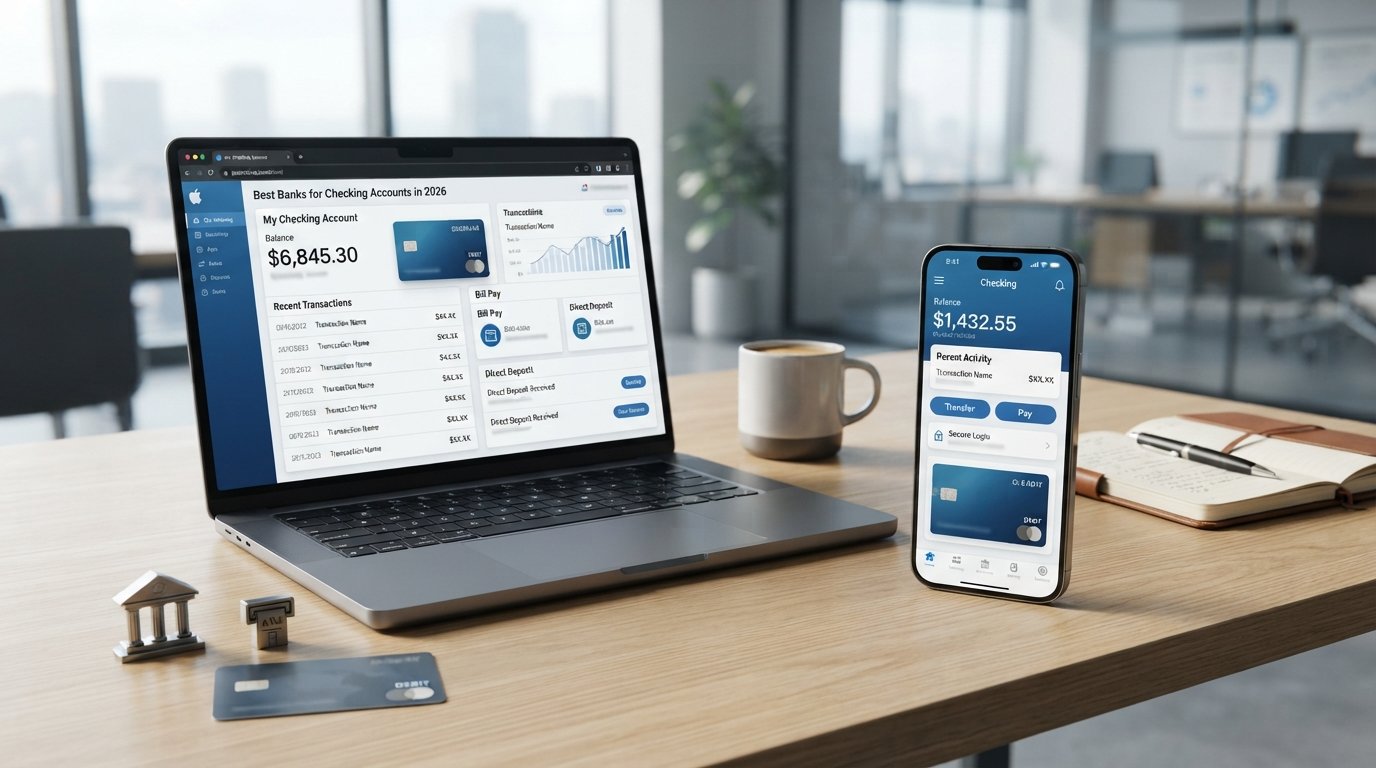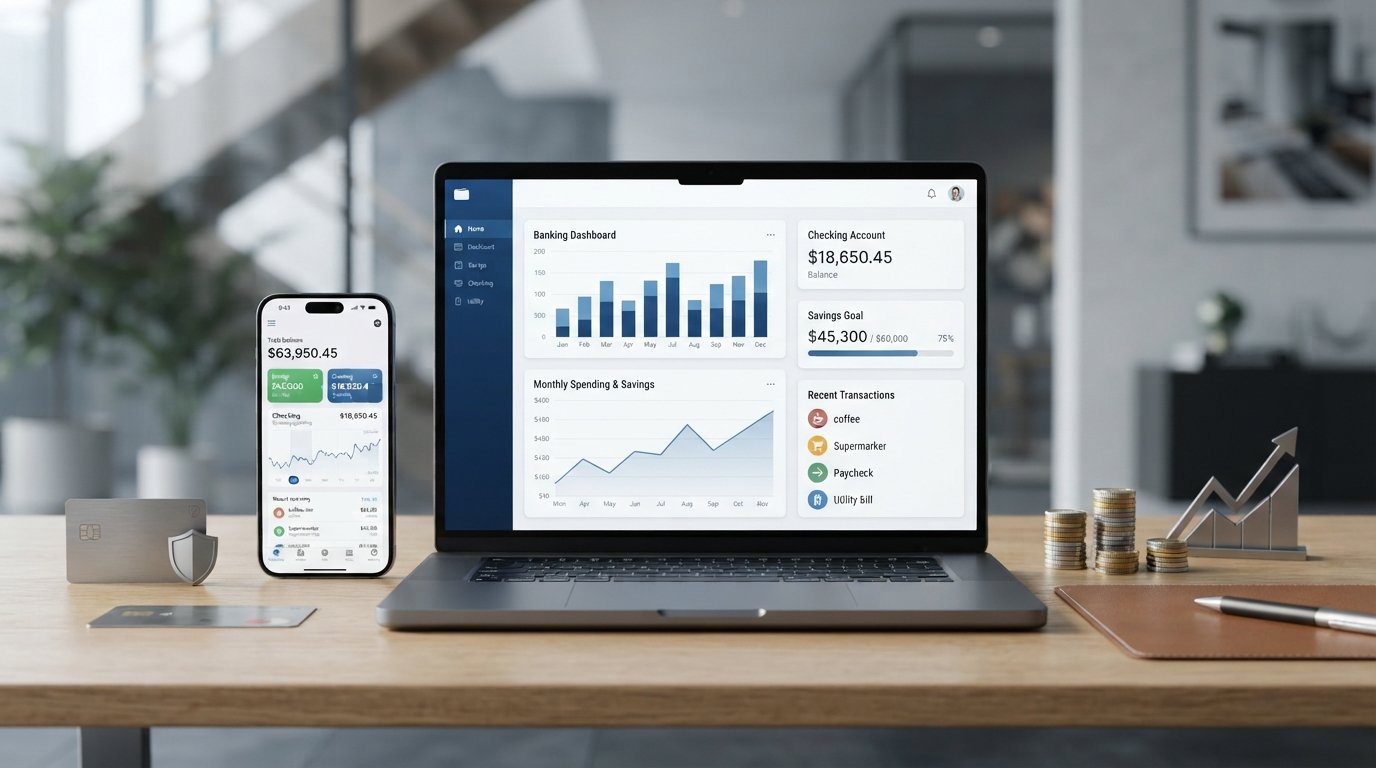
Online banking has changed how people manage their money. Instead of visiting a branch for routine transactions, customers can open accounts, transfer funds, deposit checks, pay bills, monitor spending, and manage savings directly from a smartphone or computer.
In 2026, online banks and digital-first banking platforms offer a wide range of checking and savings products. Many focus on low fees, competitive interest rates, convenient mobile apps, large ATM networks, and digital customer support.
However, there is no single online bank that is ideal for everyone. The right choice depends on what you need from your account, including savings rates, ATM access, fees, customer service, direct deposit features, and account requirements.
What Is an Online Bank?
An online bank is a financial institution that provides most or all banking services through websites and mobile applications rather than traditional branches.
Customers can typically use an online bank to:
- Open checking and savings accounts
- Deposit and withdraw money
- Transfer funds
- Pay bills
- Set up direct deposits
- Deposit checks through a mobile app
- Use debit cards
- Monitor transactions
- Manage savings and CDs
- Contact customer support digitally or by phone
Some digital banking platforms are not banks themselves. Instead, they provide banking services through partner banks. This distinction matters because customers should understand which institution holds their deposits and whether those deposits are covered by applicable federal deposit insurance.
Online Banks to Consider in 2026
Several institutions and digital banking providers stand out for different combinations of rates, fees, account features, ATM access, and digital banking tools.
SoFi Bank
SoFi offers checking and savings products designed to combine everyday banking and savings features in one account. Its 2026 offerings include no monthly account fee and opportunities for qualifying customers to earn promotional benefits through eligible direct deposits. Current advertised rates and promotions are subject to terms and can change.
SoFi may be worth considering for customers who want to manage spending and savings through one digital platform.
Capital One
Capital One provides online banking through its 360 products while also maintaining physical branches and Capital One Cafés in selected locations. Its 360 Checking account has no monthly maintenance fee, and customers can manage deposits, transfers, bills, and other routine banking activities online.
This combination can be useful for people who primarily prefer digital banking but still want access to physical locations.
Ally Bank
Ally Bank is an established online banking provider offering products such as checking accounts, savings accounts, money market accounts, and certificates of deposit.
Its digital-first model focuses on online account management and customer support. NerdWallet includes Ally among its 2026 online banking selections and specifically highlights its customer support options.
Synchrony Bank
Synchrony Bank offers online savings, money market, and CD products. It is particularly relevant to customers who are focused on savings products rather than needing a large branch network.
NerdWallet’s 2026 online-bank coverage identifies Synchrony as an option for customers interested in linked savings, CD, and money market accounts.
Varo Bank
Varo is a digital banking provider offering checking and savings products through its online platform.
Its products can be particularly relevant to customers who prioritize mobile banking and certain direct-deposit-related features. Current rates, eligibility requirements, and promotional offers should be reviewed before opening an account because these terms can change.
Bread Savings
Bread Savings focuses heavily on savings and certificate of deposit products.
For customers whose primary goal is building savings rather than using a bank branch for everyday transactions, an online savings-focused institution can be worth considering. NerdWallet includes Bread Savings among its 2026 online banking selections.
American Express National Bank
American Express National Bank offers products including high-yield savings, certificates of deposit, and Rewards Checking for eligible customers.
Its Rewards Checking account currently has no monthly fee or minimum balance requirement, although eligibility restrictions apply. American Express states that the account is currently available to certain existing U.S. customers, including eligible Card Members and customers with qualifying American Express banking relationships.
Key Features to Compare Before Choosing an Online Bank
Choosing an online bank based only on its advertised interest rate can be a mistake. A better approach is to compare the complete account.
1. Annual Percentage Yield
The annual percentage yield, or APY, shows how much interest an account can earn over a year while accounting for compounding.
A higher APY can make a meaningful difference when you maintain a substantial savings balance.
For example, if two savings accounts have different APYs, the account with the higher rate may generate more interest, assuming the rates remain unchanged and the accounts have comparable terms.
APYs are variable for many savings accounts, so today’s advertised rate should not be assumed to remain unchanged.
2. Monthly Fees
Many online banks compete by eliminating monthly maintenance fees.
Before opening an account, check whether the bank charges fees for:
- Monthly maintenance
- Excess withdrawals
- Out-of-network ATM use
- Wire transfers
- Cashier’s checks
- Paper statements
- Overdraft services
- Foreign transactions
An account with a slightly lower APY can sometimes be more useful if it has fewer fees.
3. ATM Access
ATM access is important if you frequently need cash.
Some online banks participate in large fee-free ATM networks, while others reimburse certain out-of-network ATM fees. Check the bank’s current ATM policy and network availability in the places where you normally spend time.
4. Minimum Balance Requirements
Some accounts require a minimum deposit or balance to qualify for a particular APY or avoid fees.
Other accounts have no minimum balance requirement.
If your balance tends to fluctuate, an account without restrictive balance requirements may be easier to manage.
5. Mobile Banking Features
A strong mobile application can make online banking significantly easier.
Look for features such as:
- Mobile check deposit
- Instant transaction notifications
- Card controls
- Bill payment
- Transfers
- Digital statements
- Spending analysis
- Security alerts
- Biometric login
6. Customer Service
Online banking removes the convenience of walking into a branch, which makes customer support particularly important.
Before opening an account, check whether support is available through:
- Phone
- Live chat
- Secure messaging
- Extended or 24-hour support
NerdWallet’s 2026 online-bank coverage, for example, specifically highlights 24/7 chat access as a feature of Ally Bank.
Are Online Banks Safe?
Online banks can provide strong security features, but customers should still verify the institution and understand how deposits are insured.
For U.S. customers, FDIC insurance generally covers eligible deposits at FDIC-insured banks up to $250,000 per depositor, per insured bank, for each ownership category. Covered deposit accounts include checking, savings, money market deposit accounts, and CDs.
The FDIC does not insure investments such as stocks, bonds, mutual funds, cryptocurrency, or other non-deposit investment products.
Before depositing money, customers can use the FDIC’s BankFind service to verify whether a bank is FDIC-insured.
Online Banks vs. Traditional Banks
The biggest difference between online and traditional banks is usually the way customers access services.
| Feature | Online Banks | Traditional Banks |
|---|---|---|
| Physical branches | Limited or none | Usually available |
| Mobile banking | Strong focus | Usually available |
| Monthly fees | Often low | Varies |
| Savings rates | Often competitive | Varies |
| ATM access | Network-based | Often branch-based plus networks |
| In-person service | Limited | Available |
| Account opening | Usually online | Online and/or in person |
| Customer support | Digital and phone | Branch, phone, and digital |
Neither model automatically fits every customer. People who regularly need cash deposits or in-person assistance may place greater value on branch access, while customers who handle most transactions digitally may prefer an online-focused institution.
How to Choose the Right Online Bank
Start by identifying what you actually need from the account.
If your primary goal is saving money, compare APYs, minimum balances, withdrawal restrictions, and savings features.
If you need an everyday checking account, focus on fees, ATM access, overdraft policies, direct deposit, debit-card features, and mobile banking.
If you need both checking and savings, look for institutions that allow easy transfers and provide competitive terms across both account types.
If you frequently need cash, prioritize ATM availability and fee reimbursement.
If you want CDs, compare APYs, terms, early-withdrawal penalties, and minimum deposits.
Advantages of Online Banks
Online banking offers several potential advantages.
Lower Fees
Without an extensive branch network, some online institutions can offer accounts with fewer monthly maintenance fees.
Competitive Savings Rates
Online banks frequently compete for deposits through competitive savings and CD rates. However, rates can change, so consumers should check current terms before opening an account. Current 2026 banking listings show substantial variation among savings and CD rates.
Convenient Account Management
Customers can manage many routine banking tasks from their phones or computers without visiting a branch.
Easy Account Comparison
Because online account information is readily available, consumers can compare APYs, fees, minimum balances, and account features before applying.
Potential Disadvantages of Online Banks
Online banking also has limitations.
Limited Branch Access
Customers who prefer face-to-face service may find online-only banking inconvenient.
Cash Deposits Can Be More Difficult
Not every online bank provides convenient ways to deposit physical cash.
Technology Dependence
Customers depend heavily on the bank’s website, mobile application, and digital infrastructure.
Different Customer-Service Models
Some institutions offer extensive digital support, while others may have more limited support channels.
Tips for Getting the Most From an Online Bank
Once you choose an account, use its features strategically.
Set up direct deposit if it provides useful account benefits or promotional eligibility. Automate recurring transfers into savings so that saving does not depend entirely on willpower. Turn on transaction notifications to identify unauthorized activity quickly.
You should also review your account periodically. Banking rates and account terms can change, and a product that was competitive when you opened it may not remain so indefinitely.
Frequently Asked Questions
What is the best online bank in 2026?
There is no single online bank that is best for every customer. The appropriate choice depends on factors such as APY, fees, ATM access, customer service, account requirements, and whether you need checking, savings, CDs, or a combination of products.
Are online banks FDIC insured?
Many online banks are FDIC-insured, but customers should verify the specific institution before depositing money. FDIC insurance generally covers eligible deposits up to $250,000 per depositor, per insured bank, per ownership category.
Do online banks charge monthly fees?
Many online bank accounts have no monthly maintenance fee, but policies vary. Always review the current fee schedule before opening an account.
Can I deposit cash into an online bank?
It depends on the institution. Some online banks provide access to participating ATM networks or retail locations that support cash deposits, while others may not accept cash deposits directly.
Are online banks better than traditional banks?
Online banks can offer convenient digital tools, competitive rates, and low fees, while traditional banks can provide broader branch access and in-person service. The better option depends on how you manage your money.
Final Thoughts
Online banks have become an important part of the modern banking market. In 2026, consumers can choose from institutions focused on savings, checking, CDs, digital banking, rewards, or combinations of these services.
Rather than choosing an account based solely on an advertised APY or promotional bonus, compare the complete package. Look at fees, interest rates, minimum balances, ATM access, customer service, mobile features, insurance coverage, and account eligibility.
Most importantly, verify current rates and terms directly with the financial institution before applying. Banking products and promotional offers can change, and the terms available to one customer may not be identical to those available to another.